Trade shows have always been a cornerstone of B2B growth, but in 2026, the playbook has changed drastically. The brands winning on the show floor don’t always have the biggest booths or the most branded swag. What they do have is a coordinated marketing campaign consisting of every touchpoint before, during, and after the event.
Trade shows are one of the last places where you get uninterrupted, in-person access to qualified buyers, decision-makers, and industry influencers all in the same room. The brands that understand this are investing accordingly.
But digital fatigue is real. Forrester’s 2026 consumer predictions found that one-third of buyers are actively choosing offline brand experiences over digital ones. That’s a signal, not a trend. To overcome this and succeed at trade shows in 2026, you need to know how to build a marketing strategy that generates leads, builds pipeline, and earns a measurable return.
Why trade show marketing still delivers in 2026
As programmatic ads get more expensive and organic reach shrinks across major platforms, in-person face-to-face marketing has become one of the highest-ROI channels available to brands. Industry dat
With programmatic ads getting more expensive and organic reach shrinking across every major platform, face-to-face marketing has quietly become one of the highest-ROI channels available to B2B brands. In its 2026 Marketing Spend Decision Report, the Center for Exhibition Industry Research highlighted the fact that a meaningful in-person conversation converts to a qualified opportunity at a significantly higher rate than cold outreach, because attendees opt in. They register, they travel, and they show up specifically to evaluate vendors and explore solutions.
What’s changed in recent years is buyer sophistication. When attendees approach your booth, they often already know your product category, your competitors, and even your pricing. They’ve usually done the research before they left home, and they’re not there to be sold. Rather, they’re there to validate a decision they’re already leaning toward.
Trade Show vs. Other B2B Channels
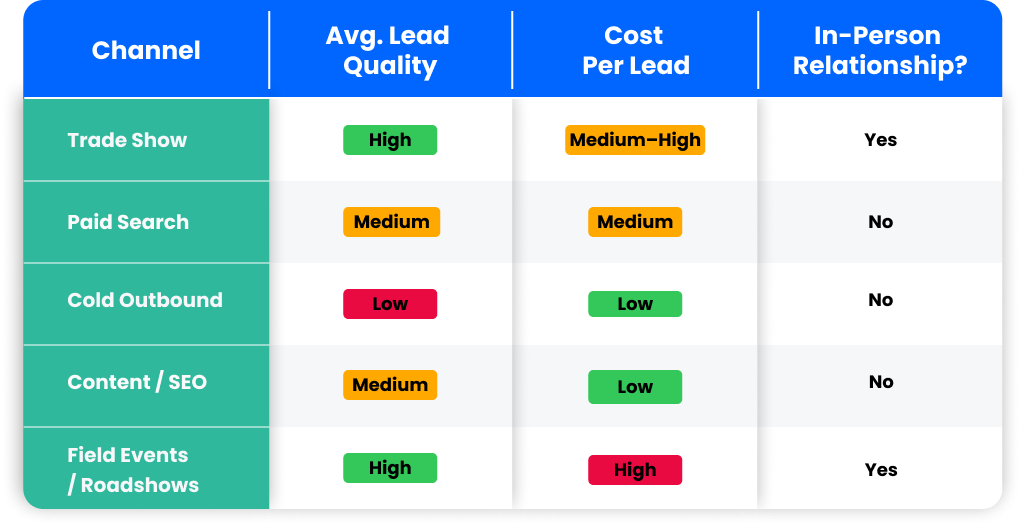
Today’s trade show floor rewards brands that demonstrate expertise, create genuine experiences, and make it easy for buyers to take the next step. Conversely, brands that lead with a pitch and a brochure are punished. The strategy laid out below is built around this reality.
Pre-show marketing: building buzz before you arrive
One common mistake exhibitors make is thinking that trade show marketing begins when you arrive at the venue. By the time day one rolls around, the companies with the most booth traffic will have started their campaign about six to eight weeks beforehand,
Segment Your Targets in Advance
Most trade shows publish attendee lists or offer hosted buyer programs. Use these lists and cross-reference them against your CRM to flag existing customers, cold high-value targets, and warm prospects. It should come as no surprise that these three groups need different outreach sequences. A customer needs a different message than someone who has never heard of your brand.
Build a Pre-Show Email Sequence
Three emails over four weeks is the right cadence:
- 4 weeks out: Announce your exhibit, including your booth number and a one-line reason to stop by.
- 2 weeks out out: Offer a specific reason to visit, whether that’s a product demo, an exclusive preview, or a giveaway available only at your booth.
- Week of the show: Send a short reminder with a direct meeting booking link, keeping it to four sentences or fewer.
The goal of every email is one action: a scheduled meeting or a booth visit commitment.
Warm Up Cold Targets on LinkedIn
Connection requests with a brief, relevant note sent three to four weeks before the show have a significantly higher acceptance rate than cold messages outside of an event context. Once connected, a single message referencing the show is all you need. Don’t pitch in the DM. Instead, invite them to stop by and reference something specific about their company that makes the conversation relevant.
Pro Tip
Brief your entire team on messaging before you hit the event. Everyone should be aligned on the two or three key points you want every visitor to walk away with. The difference between a rehearsed team and one that’s winging it is immediately obvious to buyers.
On-site trade show marketing tactics that drive leads
On the show floor, you’re competing for attention against dozens or even hundreds of other exhibitors. There’s also convention center ambient noise and the general fatigue that sets in for attendees by mid-afternoon to contend with. Every element of your booth and your team’s approach needs to work harder than you think.
Design Your Booth Around a Single, Clear Action
What do you want a visitor to do? Watch a two-minute demo? Scan a QR code? Book a meeting? Pick one and build the booth experience around it.
Lead with Conversation, Not Collateral
Train your team to open with one question that gets the visitor talking: “What brought you to the show this year?” opens a conversation. A stack of sell sheets closes it.
Capture Leads with Context, Not Just Contact Info
Equip your team with a simple field in your lead capture tool for notes. Even “evaluating by Q3, needs Salesforce integration” turns a cold name into an actionable lead.
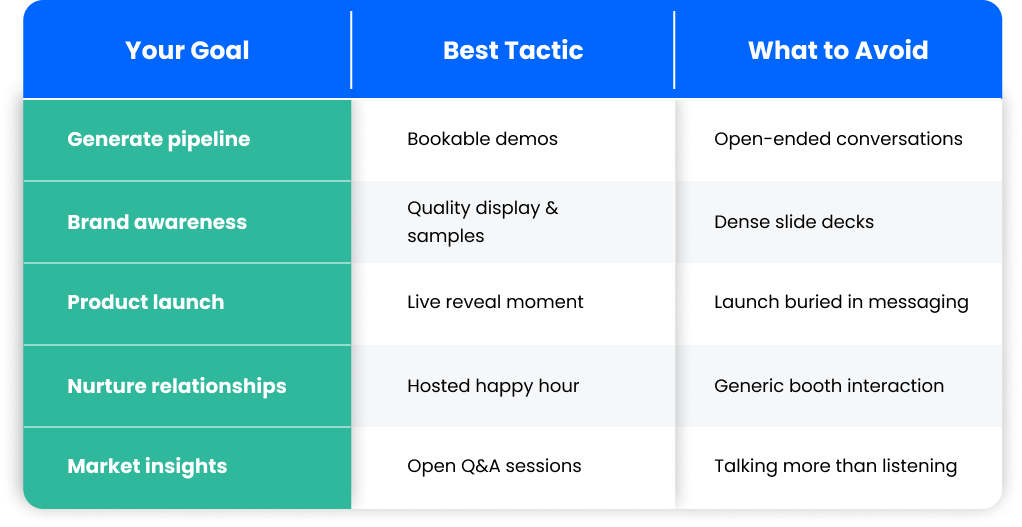
Tactics by Booth Goal
Pro Tip
Host a supplemental event. A happy hour, hosted dinner, or exclusive breakfast for key accounts can give you a leg up. The conversations that happen over drinks are often more productive than anything that happens on the show floor.
Post-show follow-up: where most companies leave money behind
Qualified leads from a trade show have a short shelf life, and a prospect who had a great conversation at your booth on Tuesday is evaluating three other vendors by Friday.
The 3-Track Follow-Up System
- Track 1. Hot leads (met criteria, expressed interest): Send a personal note within 48 hours that references something specific from your conversation.
- Track 2. Warm leads (met criteria, early-stage): A well-timed piece of thought leadership or a relevant resource every two to three weeks keeps you top of mind.
- Track 3. Cold contacts (badge scans, raffle entries, no real conversation): Don’t burn your sales team’s time on them. If they engage with your content over the next 90 days, re-qualify them.
Measuring trade show marketing ROI: metrics that actually matter
Trade show ROI is often poorly measured because teams track the wrong things. Total leads captured feel meaningful until you realize half of them came from a raffle drawing with no purchase intent.
Instead, start with qualified leads. Define “qualified” using your ICP criteria before the show – company size, title, budget authority, timeline – and measure only what meets the bar. From there, track pipeline generated (not influenced) by tagging CRM opportunities sourced from the event, and calculate cost-per-qualified-lead by dividing total show investment by qualified lead count. Benchmark that number against your other channels.
The two metrics that tell the longer story are lead-to-opportunity conversion rate and revenue closed within 12 months. A low conversion rate points to either loose qualification at the show or slow follow-up after it. Revenue closed is the ultimate measure – track it against total participation cost, and you’ll know exactly which shows deserve a return visit.
Pro Tip
The metric most teams miss: speed of first follow-up. Research consistently shows that leads contacted within 24 hours of an event close at a meaningfully higher rate than those reached 72+ hours later.
2026 Trade Show Marketing Playbook (Infographic)
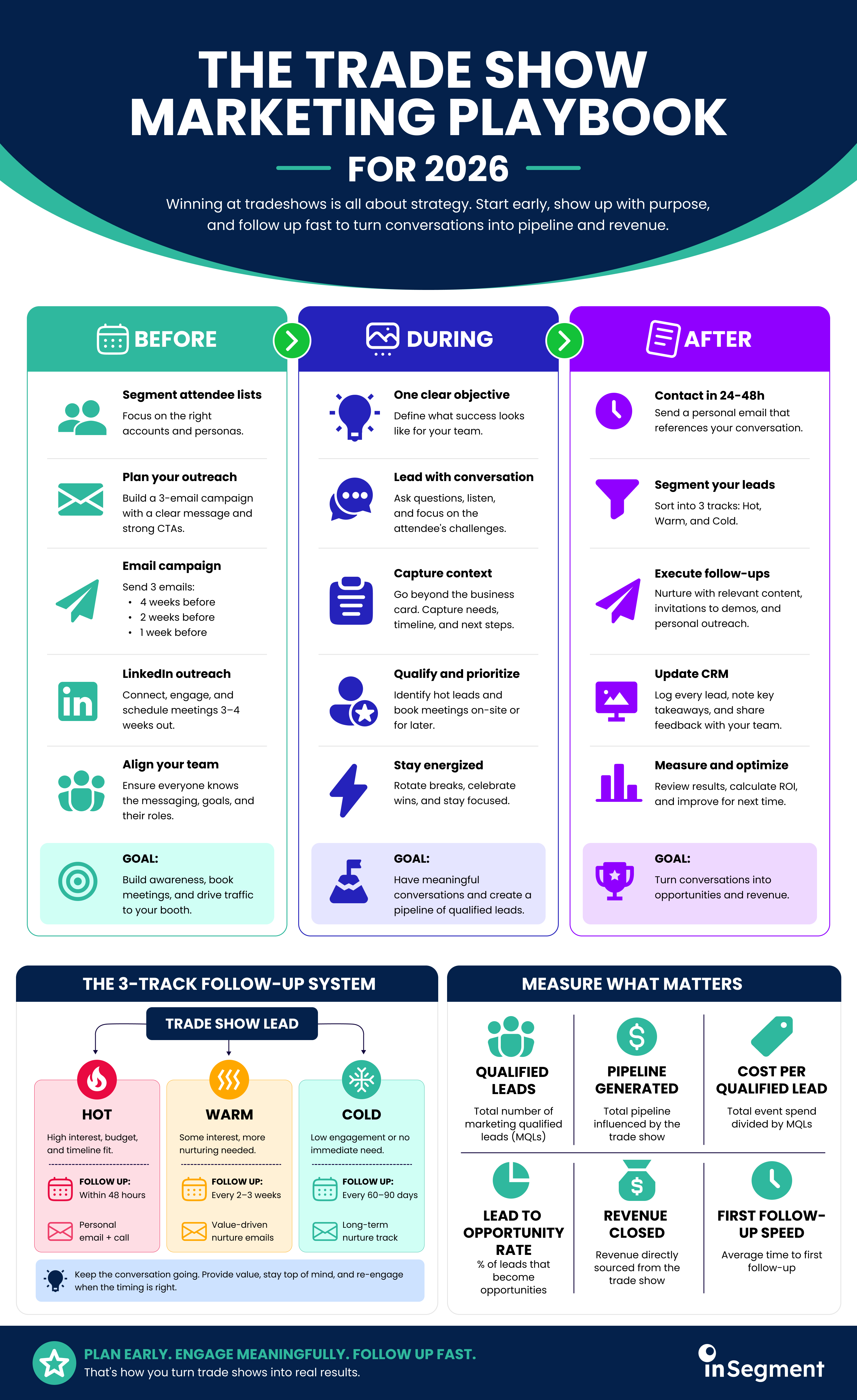
Turn your next trade show into a pipeline event
Trade show marketing in 2026 rewards preparation, precision, and follow-through. The event itself is only the middle of the campaign. The brands generating the best returns start months earlier, show up with a clear strategy, and execute their follow-up with the same discipline they bring to every other channel.
Get those three phases right, and your next trade show will generate more qualified pipeline than a full quarter of digital spend.